


5 Reasons Pharmaceutical Plants in Nigeria Choose Epoxy Flooring
Introduction
Running a pharmaceutical plant in Nigeria is not easy. You are dealing with strict regulatory requirements, hygiene audits, NAFDAC inspections, and the constant pressure to maintain a sterile and safe production environment. Every part of your facility has to meet a certain standard — and your floor is no exception.
Yet flooring is one of those things that most pharma facility managers do not think about until something goes wrong. A cracked tile collects bacteria. A rough concrete surface traps chemical residues. A poorly sealed floor fails a hygiene inspection. And suddenly, your entire production line is at risk.
This is exactly why pharma flooring Nigeria has become such an important conversation in the industry. More and more pharmaceutical plants across the country are moving away from traditional flooring options and choosing epoxy flooring systems instead. The reasons are practical, compliance-driven, and backed by real results on the ground.
In this guide, we break down the five most important reasons why Nigerian pharma plants trust epoxy flooring, compare it against other options, and list the top companies you should know about when making this decision.
What Is Pharma Flooring?
Before we get into the reasons, it helps to understand what pharmaceutical grade flooring actually means and why it is different from regular industrial or commercial flooring.
Pharma flooring refers to specialised floor systems designed to meet the strict hygiene, safety, and chemical resistance requirements of pharmaceutical manufacturing environments. These include production floors, cleanrooms, laboratories, storage areas, corridors, and packaging zones.
Standard concrete floors, ceramic tiles, and regular vinyl are simply not built for these environments. Here is why:
Concrete is porous. It absorbs chemicals, moisture, and bacteria. Tiles have grout lines that collect dirt and microbial growth no matter how hard you scrub them. Regular vinyl wears down quickly under the pressure of heavy pharmaceutical equipment and frequent chemical cleaning.
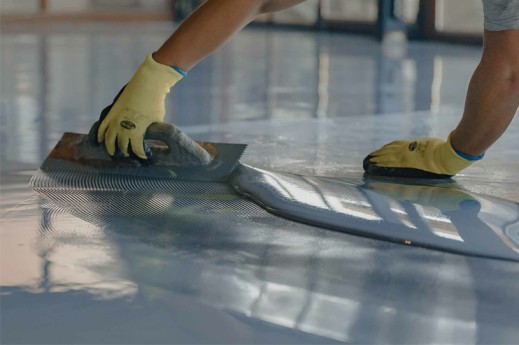
NAFDAC approved epoxy flooring, on the other hand, creates a seamless, non-porous surface that bacteria simply cannot hide in. It bonds directly to the concrete substrate, creating one continuous surface with no joints, no grout lines, and no gaps. It withstands aggressive cleaning agents, chemical spills, and heavy foot traffic without degrading.
Polyurethane flooring, often referred to as PU flooring, is another option used in pharma environments. It offers more flexibility than epoxy and performs better in areas with temperature fluctuations. Both systems have their place, but epoxy remains the most widely used and trusted option in Nigerian pharmaceutical plants because of its overall balance of performance, compliance, and cost.
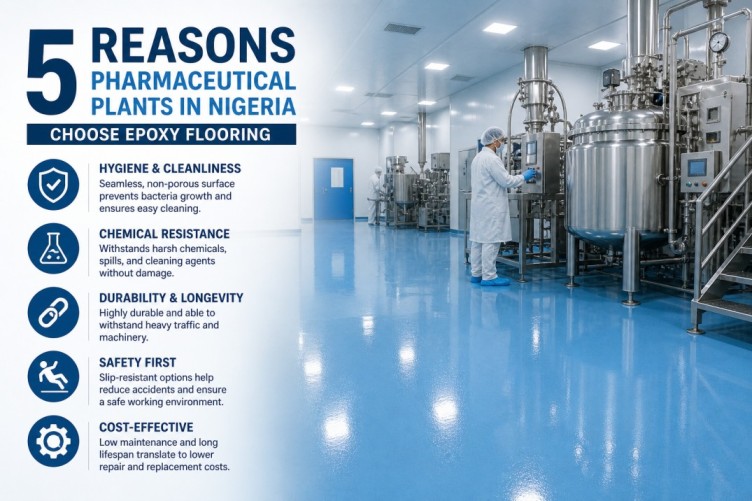
5 Reasons Pharmaceutical Plants in Nigeria Choose Epoxy Flooring
Reason 1: It Meets the Highest Hygiene and Contamination Control Standards
In pharmaceutical manufacturing, contamination is the enemy. A single contamination event can compromise an entire batch of product, trigger a regulatory shutdown, and damage your brand's reputation permanently. Your floor plays a bigger role in contamination control than most people realise.
Epoxy flooring eliminates the biggest hygiene vulnerability that most floors have joints, cracks, and porous surfaces where bacteria, fungi, and other microorganisms thrive. Because epoxy creates a seamless, non-porous surface, there are no places for contaminants to hide or multiply.
This becomes especially critical in cleanrooms and sterile production areas where air quality and surface hygiene are monitored constantly. Epoxy floors are smooth enough to prevent particulate accumulation but can also be finished with a textured anti-slip surface for safety in wet processing zones.
They are also highly compatible with the kind of aggressive disinfectants and sterilising agents used in pharmaceutical environments. Bleach solutions, hydrogen peroxide, alcohol-based cleaners, and industrial sanitisers do not affect a properly installed epoxy floor the way they damage tiles or concrete. This means your cleaning team can do their job properly without worrying about floor degradation.
For Nigerian pharma plants operating under constant hygiene scrutiny, this is not just a comfort. It is a necessity.
Reason 2: It Is NAFDAC Compliant and Keeps You Audit Ready
If you operate a pharmaceutical facility in Nigeria, NAFDAC compliance is not optional. Every aspect of your facility, from your equipment to your packaging to your floors is subject to inspection. And NAFDAC inspectors know exactly what to look for.
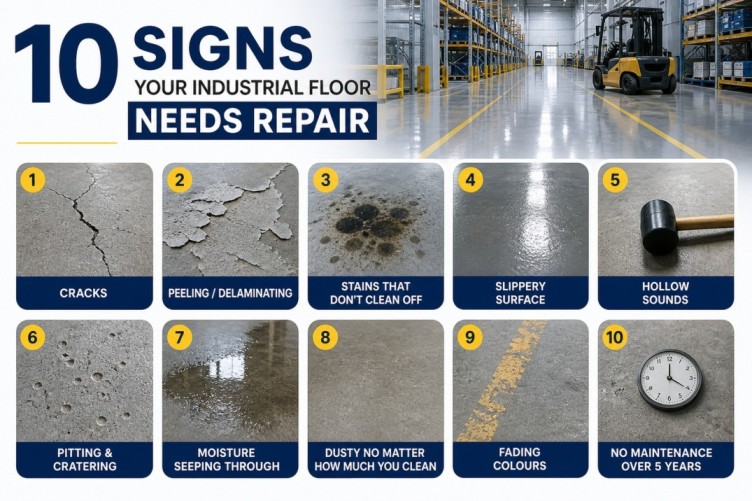
Floors that show cracks, staining, peeling surfaces, or visible grout contamination will flag issues during an audit. These findings can result in warnings, production halts, or in serious cases, facility shutdowns. The cost of a failed audit goes far beyond the fine itself. It includes downtime, reapplication costs, and the reputational damage of being seen as non-compliant.
NAFDAC approved epoxy flooring systems are specifically formulated to meet the hygiene and safety requirements set by Nigerian regulatory authorities for pharmaceutical, food processing, and healthcare environments. When you install a NAFDAC-approved system from a qualified provider, you are not just getting a good floor. You are getting documented compliance that you can present during any inspection.
This gives facility managers a level of confidence that no other flooring option can match. You go into every audit knowing your floor is not going to be the reason you fail. And in an industry where compliance is everything, that peace of mind has real value.
Companies like Ashveda Industries have built their entire pharma flooring offering around this compliance requirement. Their NAFDAC-approved systems are specifically designed for pharmaceutical plants, food processing units, and healthcare environments — which means the product has already been evaluated and cleared for use in exactly the kind of facility you are running.
Reason 3: It Handles Chemical Spills Without Breaking Down
Pharmaceutical production involves a wide range of chemicals. Solvents, acids, alkalis, disinfectants, cleaning agents, and active pharmaceutical ingredients are all part of daily operations. And no matter how careful your team is, spills happen.
On a concrete floor, a chemical spill soaks straight into the surface and begins breaking down the substrate over time. On a tiled floor, chemicals seep into the grout and cause long-term damage that is almost impossible to fully reverse. On an epoxy floor, the same spill sits on the surface and can be cleaned up completely without leaving any trace or causing any damage.
This is because epoxy has exceptional chemical resistance. The molecular structure of a cured epoxy floor creates a barrier that resists penetration from most industrial chemicals used in pharmaceutical manufacturing. This protects both the floor itself and the concrete substrate underneath, extending the life of your facility infrastructure significantly.
For high-risk zones like chemical storage areas, dispensing rooms, and washing stations, epoxy flooring is not just recommended. It is the standard choice because nothing else performs at the same level under those conditions.
Over the long term, this chemical resistance translates directly into lower maintenance costs. You are not regrouting tiles every few years. You are not patching corroded concrete sections. Your floor stays intact, functional, and compliant for years at a time.
Reason 4: It Is Built for Heavy Equipment and Constant Foot Traffic
A pharmaceutical production floor is one of the most demanding environments for any surface material. You have heavy machinery running continuously. You have workers on their feet for long shifts. You have trolleys, forklifts, and equipment being moved across the floor multiple times a day. And this happens not once a week but every single working day.
Standard flooring simply cannot keep up with this level of stress. Tiles crack under repeated impact. Concrete dusts and degrades under abrasion. Vinyl wears thin. But epoxy flooring, when applied at the correct thickness and specification for a pharmaceutical environment, handles all of this without showing significant wear.
For a pharmaceutical plant floor Lagos based facility managers often ask about, load-bearing capacity is a specific concern because many Lagos-based plants operate in buildings that were not originally designed for heavy pharmaceutical manufacturing equipment. Epoxy flooring systems can be engineered to specific compressive strength requirements, ensuring that your floor handles the load without cracking or deforming.
Beyond load bearing, epoxy floors also offer important safety features for workers. Anti-slip finishes are available for wet processing zones. Colour-coded zones can be applied during installation to clearly separate clean areas, hazardous zones, walkways, and emergency exits. This kind of floor marking is a standard requirement in pharmaceutical GMP environments and epoxy handles it far better than paint on concrete or adhesive floor tape.
Worker safety and operational efficiency go hand in hand on a well-designed epoxy floor. And in a pharmaceutical plant where precision and compliance are non-negotiable, every detail of your floor design contributes to the overall performance of your facility.
Reason 5: It Is Low Maintenance and Cost Effective Over the Long Term
One of the biggest misconceptions about epoxy flooring in Nigeria is that it is expensive. And yes, the upfront installation cost of a high-quality epoxy system is higher than laying tiles or sealing bare concrete. But when you look at the total cost over five to ten years, epoxy is almost always the more affordable option.
Here is why.
Tiles require regular regrouting, replacement of cracked units, and constant deep cleaning of grout lines. Concrete requires sealing, patching, and dusting treatments every few years. Both require significant downtime during maintenance, which in a pharmaceutical plant means lost production time and that cost adds up fast.
An epoxy floor, once properly installed, requires minimal maintenance. Daily cleaning with standard industrial cleaning agents is all it needs. If a section is damaged, it can be repaired locally without having to redo the entire floor. And a well-maintained epoxy floor in a pharmaceutical environment can last anywhere from seven to ten years before needing any significant attention.
For Nigerian pharmaceutical companies operating in a challenging economic environment with rising input costs, this long-term cost efficiency is a compelling reason to choose epoxy. You invest once, maintain it simply, and get years of reliable, compliant performance in return.
Top 5 Pharma Flooring Companies in Nigeria
When it comes to pharma flooring Nigeria, choosing the right installation partner is just as important as choosing the right flooring system. Here are the top five companies you should know about.
1. Ashveda Industries Limited
Ashveda Industries is Nigeria's leading epoxy and PU flooring specialist with over 12 years of experience delivering high-performance flooring solutions for pharmaceutical plants, food processing facilities, and healthcare environments across the country. Their NAFDAC-approved systems are specifically designed for sterile and hygiene-critical environments, ensuring zero bacterial growth and full regulatory compliance.
Ashveda offers custom seamless epoxy and PU flooring solutions for cleanrooms, production floors, corridors, and storage areas. Their anti-microbial flooring systems meet the highest pharmaceutical grade standards and are backed by a track record of successful installations across Nigeria.
Website: www.ashveda.com
Phone: +234 802 573 5019
2. Sika Nigeria
Sika Nigeria brings global pharmaceutical flooring expertise to the Nigerian market through three local production plants. Their epoxy and polyurethane flooring systems are formulated to WHO-compliant cleanroom specifications, making them a trusted choice for complex pharma facilities that require international standards. Local specialist contractor training and R&D backing ensure consistent, reliable application across all project sizes.
Website: nga.sika.com | Phone: +234 80 90 44 22 23
3. Floors Nigeria Limited
Floors Nigeria offers a wide range of affordable and waterproof flooring solutions with nationwide delivery and fast installation services. As an authorised dealer for internationally recognised brands like Beauflor and UNILIN, they provide consistent quality for healthcare spaces, semi-sterile environments, and commercial pharmaceutical offices. Their nationwide reach and quick turnaround make them a practical option for facilities that need fast solutions.
Website: www.floornigeria.com | Phone: +234 813 835 2355
4. Epoxy Oilserv
Epoxy Oilserv has built a strong reputation for epoxy flooring in manufacturing and pharmaceutical sectors across Nigeria. Their high-strength, cleanroom-compliant coatings are designed to withstand pharmaceutical chemical spills and heavy production traffic. Their focused specialisation in epoxy systems means they bring deep technical knowledge to every pharma flooring project they handle.
Website: epoxyoil.com | Phone: 08053390165
5. Costar Chem Nigeria
Costar Chem rounds out the top five with a versatile range of epoxy, polyurea, and sealer systems suited for pharmaceutical grade flooring. Their chemical coatings offer excellent resistance for drug manufacturing environments, and their West African supply chain ensures consistent product availability for large-scale pharma projects. Their cost-effective solutions help facilities maintain sterile flooring at a lower total lifecycle cost.
Website: costarchem.ng | Phone: +234 908 843 4791
How to Choose the Right Pharma Flooring Company in Nigeria
Not every flooring company that claims to do pharma flooring actually understands what pharmaceutical grade installation requires. Here is what to check before you commit to any provider.
Ask specifically about NAFDAC compliance. Any company offering flooring for Nigerian pharmaceutical plants should be able to tell you exactly which of their products are NAFDAC approved and provide documentation to support that claim. If they cannot, walk away.
Look for pharma-specific project experience. General industrial flooring experience is not the same as pharmaceutical flooring experience. Ask for references from pharma clients specifically, and if possible, visit a completed project.
Verify their surface preparation process. The biggest cause of epoxy floor failure in Nigeria is poor surface preparation. A credible company will insist on proper concrete surface assessment, moisture testing, and mechanical preparation before any coating is applied. If they are offering a quick and cheap installation without these steps, the floor will fail prematurely.
Check warranty terms clearly. A reliable pharma flooring provider will offer a warranty covering both materials and workmanship. Understand what is included and what is not before you sign.
For a pharmaceutical plant floor Lagos based project, always factor in the provider's logistics capability and response time for post-installation support. A company with a strong local presence will be able to respond quickly if any issue arises after installation.
Conclusion
Your pharmaceutical plant floor is not just a surface to walk on. It is a critical part of your hygiene system, your compliance framework, and your operational infrastructure. Getting it right from the start saves you money, keeps you compliant, and protects the integrity of everything you manufacture.
Epoxy flooring has proven itself as the clear choice for Nigerian pharmaceutical plants because it delivers on every dimension that matters — hygiene, compliance, chemical resistance, durability, and long-term cost efficiency. And with experienced pharma flooring Nigeria specialists like Ashveda Industries available to design and install the right system for your facility, there is no reason to settle for a floor that puts your operations at risk.
Whether you are building a new pharmaceutical facility, renovating an existing one, or simply overdue for a floor assessment, now is the right time to act. Contact Ashveda Industries today for a free site consultation and find out exactly what your facility needs to stay compliant, safe, and productive for years to come.