
10 Warning Signs Your Floor Needs Recoating or Replacement
Introduction
Your industrial floor takes a beating every single day. Forklifts roll over it. Chemicals spill on it. Heavy machinery sits on it for hours. Workers walk across it in every shift. And through all of that, most factory and warehouse managers barely give it a second look, until something goes seriously wrong.
The truth is, your floor is trying to tell you something long before it actually fails. And catching those early warning signs can save you a lot of money, prevent accidents, and keep your operations running without unnecessary downtime.
If you are looking into industrial flooring repair in Nigeria, this guide is for you. Whether you run a warehouse in Lagos, a production facility in Abuja, or a pharmaceutical plant in Port Harcourt, this article will help you understand exactly when your floor needs attention and what to do about it.
What Is Industrial Flooring?
Before we get into the warning signs, it helps to understand what we are dealing with.
Simply put, it is a heavy-duty flooring system designed specifically for factories, warehouses, pharmaceutical plants, food processing units, car parks, and commercial facilities. Unlike regular residential or office flooring, industrial flooring is built to handle extreme pressure, chemical exposure, heavy foot traffic, and harsh environmental conditions.
The most common types used in Nigeria include:
- Epoxy flooring which creates a hard, seamless, chemical-resistant surface ideal for factories and cleanrooms
- Polyurethane (PU) flooring which offers more flexibility and is better suited for environments with temperature changes
- Cementitious flooring which is used where very heavy loads are common
- Concrete sealers and hardeners which are applied over existing concrete to improve its strength and resistance
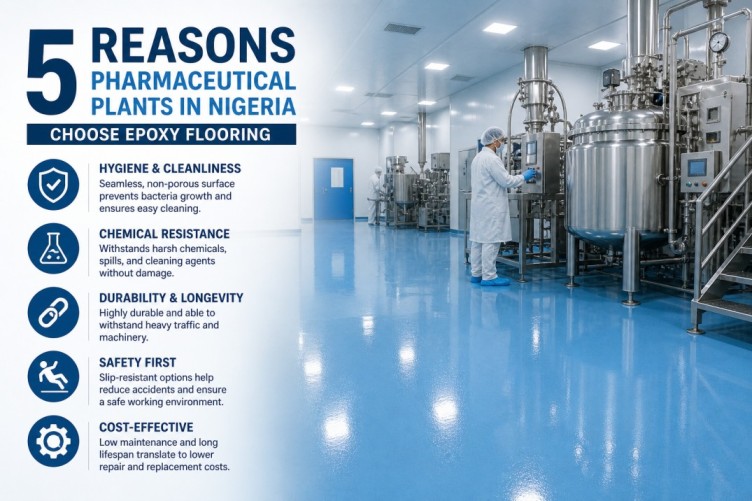
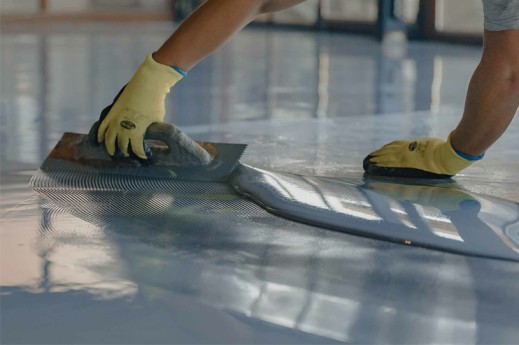
Industrial epoxy floor coating is by far the most widely used option across Nigerian industries because of its durability, easy maintenance, and resistance to oil, chemicals, and moisture. When applied correctly, it can last anywhere from 5 to 10 years before needing attention.
Now, let us look at the signs that tell you your floor has reached that point.
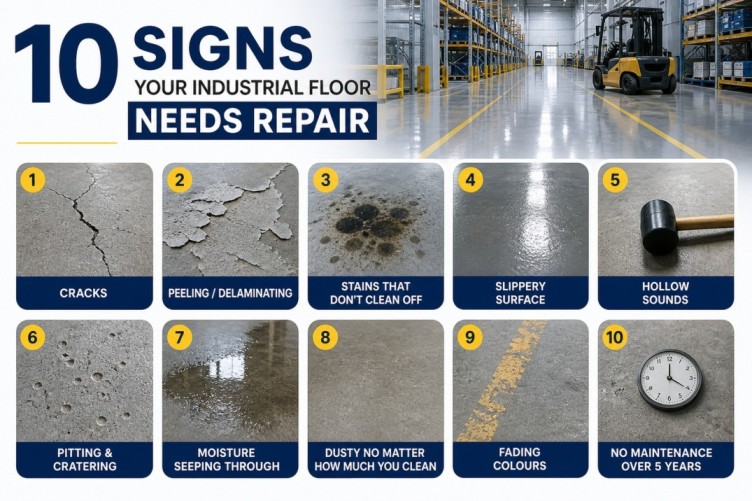
10 Signs Your Industrial Floor Needs Repairing
Knowing the signs your industrial floor needs repair early can help you avoid costly shutdowns and safety hazards. Here are the 10 most important ones to watch out for.
1. Cracks Are Appearing on the Surface
Small hairline cracks might seem harmless at first. But in an industrial setting, they rarely stay small. Cracks allow moisture to seep underneath the floor coating, which weakens the bond between the coating and the concrete below. Over time, this leads to larger cracks, bubbling, and eventually, full surface failure. If you spot cracks forming in more than one area, that is your floor asking for attention right away.
2. The Floor Surface Is Peeling or Delaminating
If sections of your floor coating are lifting off the concrete and peeling away, this is called delamination. It happens when moisture gets trapped between the coating and the substrate, or when the original application was done on a poorly prepared surface. Peeling floors are not just an eyesore. They create uneven surfaces that can catch on forklift wheels or cause workers to trip, which is a serious safety issue.
3. You Are Seeing Stains That Do Not Clean Off
Industrial floors are expected to deal with oil, grease, chemicals, and cleaning agents on a regular basis. A healthy, intact floor coating handles all of this without absorbing anything. But when the coating has worn down or started to break down, stains begin to soak into the surface rather than sitting on top of it. If your cleaning team is scrubbing the same stains every week and making no progress, the protective layer has likely failed.
4. The Floor Has Become Slippery
A drop in surface texture is a red flag that should never be ignored. Industrial floors are designed with a specific level of slip resistance to keep workers safe. As the top coat wears away from daily traffic and cleaning, this anti-slip property disappears. A floor that was once safe becomes a hazard zone. If workers are slipping more often or you are receiving complaints about the floor being slick, that is a clear sign the coating needs to be refreshed.
5. There Are Hollow Sounds When You Walk Across Certain Areas
Tap or walk across your floor and listen carefully. If certain sections produce a hollow, drum-like sound rather than a solid thud, it means the coating has separated from the concrete below. Those hollow areas are essentially voids waiting to collapse under load. This is one of the more serious structural warning signs and needs professional assessment immediately.
6. Pitting and Cratering on the Surface
Chemical spills that are not cleaned up quickly can eat into the floor coating and leave behind pits or craters. In food processing facilities and pharmaceutical plants, this is especially problematic because those pits collect bacteria and are nearly impossible to sanitise properly. If your floor looks like it has been dotted with small holes or rough patches, the surface integrity has been compromised.
7. Moisture or Water Is Seeping Through
If you notice damp patches, water bubbles under the coating, or puddles forming in areas where the floor is supposed to be sealed, you have a moisture problem. This can happen due to a rise in groundwater pressure, poor initial waterproofing, or a coating that has simply aged past its lifespan. Moisture underneath an industrial floor coating accelerates deterioration and can also damage machinery and stored goods.
8. The Floor Is Dusty No Matter How Much You Clean
Concrete floors that are not properly sealed or coated tend to shed fine dust particles continuously. This is known as concrete dusting, and it is caused by the surface layer breaking down. In industries like food processing, pharmaceuticals, or electronics manufacturing, this kind of dust is a serious contamination risk. A dusty floor in these environments is not just a cleanliness issue. It is a compliance issue.
9. The Colour Has Faded Significantly
Industrial floor coatings are also designed with colour coding in mind. Safety walkways are marked in yellow, machinery zones in red, and clean areas in white or grey. When these colours fade dramatically, it affects safety compliance on your facility floor. Faded colours are also an indicator that the UV resistance or the top coat protection of the floor has broken down, meaning deeper layers are now exposed.
10. You Have Not Maintained the Floor in Over 5 Years
Even if your floor looks okay on the surface, if it has not been inspected, maintained, or recoated in five or more years, it is time to get a professional assessment. Most industrial floor coatings, including industrial epoxy floor coating, are designed for a lifespan of 5 to 10 years under standard operating conditions. Waiting until complete failure is always more expensive than proactive maintenance.
Recoating vs Replacement: Which One Do You Actually Need?
This is the question every facility manager asks once they spot the warning signs. The answer depends on how deep the damage goes.
When recoating is the right call:
- The damage is limited to the top coat only
- Cracks are hairline and have not reached the concrete substrate
- Staining and fading are surface-level issues
- The floor is structurally sound but has lost its protective properties
When to replace industrial flooring entirely:
- The damage has reached the concrete substrate
- There are multiple hollow zones across large areas
- Moisture has caused widespread delamination
- The existing floor has been recoated multiple times and cannot bond any further
- The facility's operational needs have changed significantly
In many cases, a professional assessment will reveal that recoating is all that is needed. This is a more affordable and faster option compared to full replacement. However, skipping a replacement when the floor genuinely needs one will only lead to higher costs down the line.
Top 5 Industrial Flooring Companies in Nigeria
If you have spotted any of the signs above and are ready to take action, here are five companies you can trust for industrial flooring repair in Nigeria.
1. Ashveda Industries Limited
Ashveda Industries is Nigeria's leading epoxy and PU flooring expert, with over 12 years of experience delivering high-performance flooring solutions for factories, warehouses, pharmaceutical plants, and commercial facilities across the country. They specialise in industrial epoxy floor coating, PU flooring systems, construction chemicals, waterproofing, concrete repairs, and joint sealants. Their products are NAFDAC-approved, making them especially reliable for hygiene-critical environments like food processing units and healthcare facilities. Ashveda offers customised solutions designed to reduce long-term maintenance costs while meeting international performance standards.
Website: www.ashveda.com
Phone: +234 802 573 5019
2. Sika Nigeria
Sika Nigeria brings global expertise to the Nigerian market with local production across three plants in the country. They offer a comprehensive range of epoxy, polyurethane, and cementitious flooring systems, along with concrete repair mortars like SikaRep 105 for industrial durability. Their licensed specialist contractor programmes and ongoing training initiatives ensure consistent, high-quality application across projects of all sizes.
Website: nga.sika.com
Phone: +234 80 90 44 22 23
3. Floors Nigeria
Floors Nigeria offers a wide selection of affordable and waterproof flooring solutions with nationwide delivery across Nigeria. They cover 3D epoxy, SPC, vinyl, laminate, WPC, carpets, and interlocking mats for residential, commercial, and professional applications including hospitals and offices. As an authorized dealer for brands like Beauflor and UNILIN, they bring competitive pricing and fast installation services to the table.
Website: floornigeria.com
Phone: 234 (813) 835 2355
4. Costar Chem Nigeria
Costar Chem brings decades of experience in construction chemicals and flooring systems including epoxy, polyurethane, polyurea, cementitious floors, and concrete sealers. They serve industrial facilities, car parks, and high-traffic zones with tailored solutions that extend floor life significantly. Their reach spans Nigeria, West Africa, the UAE, and beyond, making them a reliable partner for large-scale industrial projects.
Website: costarchem.ng
Phone: +234 908 843 4791
5. GZ Industrial Supplies
GZ Industrial Supplies is Nigeria's largest direct marketer of MRO products, with over 100,000 items and next-day delivery nationwide. While not a flooring contractor, they are an essential resource for quick procurement of flooring maintenance supplies including chemicals, cleaners, paints, lubricants, and tools needed for recoating projects. With branches in Lagos, Abuja, Port Harcourt, and Calabar, they support industrial flooring repair projects across the country.
Website: www.gz-supplies.com
Phone: +234 905 579 3558
How to Choose the Right Flooring Company in Nigeria
Not every flooring company is the right fit for your specific facility. Here is what to check before you sign a contract.
Look at their experience in your industry. A company that has worked in pharmaceutical plants understands hygiene compliance requirements. A company experienced in warehouses understands load-bearing needs. Industry-specific experience matters more than general flooring experience.
Ask about their certifications. In Nigeria, NAFDAC approval is critical for food, pharma, and healthcare environments. ISO certifications and international standard compliance are good indicators of quality in other industrial settings.
Request a site inspection before any quotation. Any credible company will want to assess your floor condition before recommending a solution. If someone gives you a quote without seeing the site, that is a red flag.
Check their warranty terms. A reliable flooring company will back their work with a warranty covering both materials and workmanship. Understand exactly what is and is not covered before you commit.
Ask for references or case studies. Look for projects they have completed in similar facilities. This gives you real-world evidence of their capabilities.
Conclusion
Your industrial floor is one of the most hardworking assets in your facility. It handles weight, chemicals, constant traffic, and environmental stress every single day. Ignoring the warning signs costs you more in the long run whether through accidents, failed inspections, or emergency replacements that disrupt operations.
The good news is that most floor issues, when caught early, can be resolved with a well-planned recoating rather than a full replacement. And with experienced partners available for industrial flooring repair in Nigeria, getting your floor back to full performance does not have to be complicated or disruptive.
If you spotted two or more of the signs listed above in your facility, now is the right time to get a professional floor assessment done. Do not wait for the floor to completely fail before you act.